Paver Patio Installation in Portsmouth, RI, When the Patio Is Also a Pool Deck
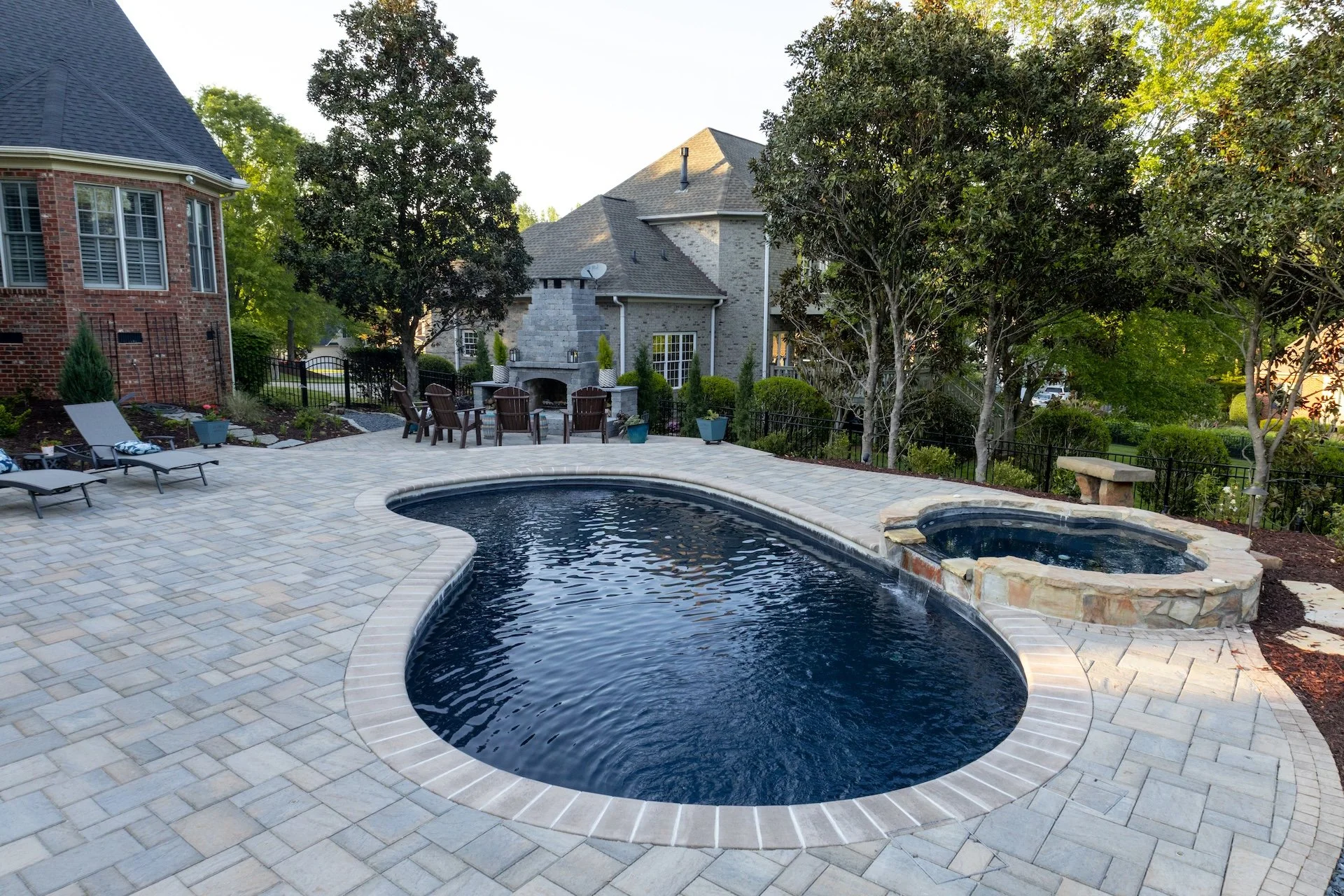
A paver patio installation in Portsmouth, RI that stops at the back door and one that continues around a pool are two different specifications, even where the paver is identical. The surface has to stay comfortable on bare feet, shed water away from the pool, and take a joint against the coping that moves.
Most of what goes wrong on a poolside terrace is decided in the choice of unit and the direction the water is sent, and neither is obvious from a sample board.
Premier Outdoor Group has built pools and the terraces around them on Aquidneck Island since 2007. We use travertine, natural stone and premium concrete pavers from Techo-Bloc and Unilock so the surface still looks intentional ten years in.
Related: A Paver Patio That Feels Right at Home in Portsmouth, RI
What Changes When A Paver Patio Is Also A Pool Deck?
The surface stops being purely a floor and becomes part of the pool's water management. Splash-out is constant in July, so the paving is wet for much of the season. Grip becomes a specification rather than a preference, and the joints see far more water than a normal terrace does.
The whole field also has to be pitched so the water it sheds leaves the area rather than running back into the pool. Our patio and pool deck work treats those as one set of decisions.
Comfort underfoot comes down to two properties that pull in different directions. Texture gives grip when the surface is wet, and a heavily textured unit is harder on bare feet. Color decides heat: a dark paver in full August sun is uncomfortable to stand on by early afternoon, while pale travertine stays usable.
The sensible pattern is a lighter, lightly textured field around the water, with stronger color used for borders and steps where nobody stands barefoot.
How Should Water Leave A Patio That Surrounds A Pool?
Away from the pool and away from the house, at a fall you can feel underfoot but not see. Roughly a quarter of an inch per foot is the working figure. On a flat lot that is awkward to achieve, and it usually means a discreet channel drain across the low side or a planted bed built to take it.
The reason this matters more beside a pool is that runoff from a terrace carries fertilizer, mulch and grit, and everything it carries ends up in the filtration system if the fall is pointed the wrong way.
Where the paving meets the coping is the other detail to ask about. The pool shell and its coping behave as one structure and the surrounding paving behaves as another, and they do not move together. A rigid mortar joint between them cracks in the first few winters.
A properly detailed installation leaves a flexible joint at that boundary, sized and filled to take small seasonal movement without opening up. It is invisible when done well and obvious within two seasons when skipped, so confirm in writing that a bidder has allowed for it.
Related: Tired of a Basic Backyard? How Custom Paver Patios Are Redefining Landscape Design in Bow, NH
How Does A New England Winter Act On A Poolside Terrace?
It works on the base rather than the paver. Water that saturates the ground under a terrace and freezes will heave it, and a pool deck is by definition the wettest paving on the property.
The defense is a well-drained base built in compacted layers on ground excavated deep enough to sit under the worst of the frost movement, with edge restraint holding the perimeter so the field cannot creep outward as it flexes.
Getting that right at installation is far cheaper than relaying a terrace in year five, and the design side of the process is where it is decided.
Specify The Terrace And The Pool Deck Together
If a patio is going in near a pool, the two should be priced as one piece of work rather than sequenced as separate jobs, because the drainage and the joint at the coping are decided by both. We will walk the property, take the levels, and set out the surface and the falls plainly enough to compare against anything else you have been quoted.
Premier Outdoor Group builds patios, pool decks and outdoor living spaces across Portsmouth and New England.Schedule a landscape design consultation with the team to get your project started.
In Summary
Can pavers be laid over an existing concrete pool deck?
Sometimes, if the concrete is sound and the resulting height still works against the coping and any doors. The slab has to drain, because water trapped beneath the pavers shows up later as movement.
Do poolside paver joints need a different filler?
They benefit from a stabilizing joint material rather than plain sand, because constant wetting washes sand out and open joints let the field shift. It also reduces what grows in the joints on a surface that stays damp all summer.
How far should a terrace extend beyond the pool edge?
Enough for a lounger and someone walking behind it, which in practice is around eight feet on the sunny side and less on the others. Sizing by furniture rather than by a uniform border avoids paying for paving nobody stands on.
Related: From Drab to Dreamy: Creating Luxury Paver Patios in Newton & Lexington, MA
ABOUT THE AUTHOR
A passion for the outdoors and the experience of working with his hands at a young age fostered the realization of Gairad DeCastro’s dream to start a top-rated design/build company on Aquidneck Island in 2007. His company has since grown from humble beginnings to a sought-after local pool contractor. Now, Premier Gunite Pools is recognized as a leader in providing creative, quality, and reliable inground pools. Gairad’s philosophy and mission statement remain simple: “If it’s worth doing, it's worth doing right.” His goal is to exceed every customer’s expectations for the amount of fun and relaxation they can have with a luxurious pool in their backyard.