Outdoor Living Contractor in Portsmouth, RI: The Decisions You Cannot Revisit
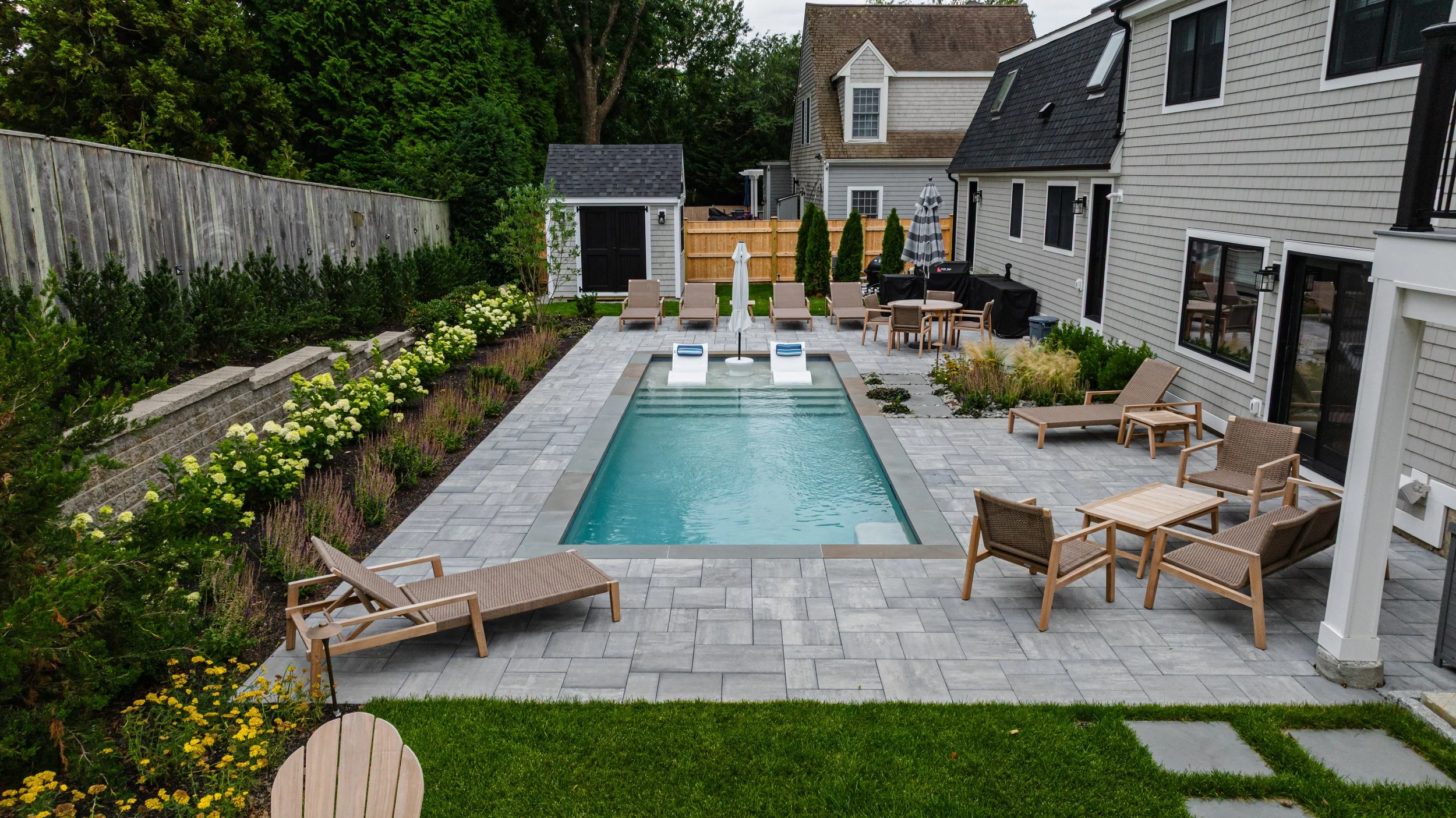
Most of what an outdoor living contractor in Portsmouth, RI builds can be adjusted later. Furniture moves. Planting changes. Lighting gets added. A small number of decisions, though, get locked the moment the first machine arrives, and homeowners rarely know which ones those are until it is too late to change them.
Premier Outdoor Group has been designing and building outdoor spaces on Aquidneck Island since owner Gairad DeCastro launched the design and build company there in 2007.
Over that time the pattern has been consistent about which choices come back to haunt a project, and they are almost all about position, elevation and what runs underground.
Related: How Our Premier Outdoor Group Experts Elevate Outdoor Living and Backyard Design in Andover, MA
Which Outdoor Living Decisions Are Permanent?
The permanent decisions are where the structure sits, what elevation it sits at, and what services run beneath it. Those three travel together, and all three get set before anything visible is built.
Everything a homeowner notices first, the paving color, the furniture layout, the planting, can be revised for a fraction of what it costs to move a slab six feet to the left. That imbalance is the reason the early design conversation spends so long on things nobody will see once the project is finished.
Position also sets the views and the sun. A patio placed for the afternoon light off the water reads very differently from one placed for convenience to the kitchen door, and only one of those can be chosen before the base goes in.
Why Does Patio Elevation Matter So Much on a Coastal Lot?
Patio elevation matters because water has to leave, and on a New England coastal property it has to leave in a hurry several times a year. The finished height of a patio sets the fall across it, which sets where the runoff goes.
Set that height to suit a door threshold without checking the whole fall and the water finds the house instead. Our teams work the elevations across the full space before a single base course goes in.
Coastal lots add a second pressure. Wind-driven rain and storm surges arrive faster than inland runoff, so the drainage path has to carry a heavy load quickly rather than a light one slowly. Getting the grade right once is far cheaper than chasing standing water across a finished surface for years.
What Utilities Have to Go In Before Patio Paving?
Conduit, gas, water and drainage all have to go in before paving. All of it crosses the area that is about to be covered, and all of it is comparatively simple while the ground is open.
Adding a gas line to a finished patio later means lifting the paving along its route and resetting it. Our outdoor living work puts the sleeves in during excavation even where a feature is still only a possibility, because an empty conduit costs very little and an unplanned one costs a season.
The list is longer than most homeowners expect. Power for lighting, heaters and audio, a water line for a future sink, low-voltage runs for controls and a gas line for a fire feature can all share a trench if they are planned together, which keeps the excavation to a single pass.
How Early Does a Pergola or Pavilion Have to Be Decided?
A pergola or pavilion has to be decided before the paving, because the structure needs footings and those footings go through whatever surface is already there.
A homeowner who is undecided can still protect the option. Footings can be placed and left below the finished surface, which keeps a pergola or pavilion on the table for a later season without a rebuild.
Size matters as much as timing. A covered structure that will hold an outdoor kitchen or a ceiling heater carries more load and needs larger footings than an open pergola, so the intended use belongs in the conversation even if the build is years away.
Does One Crew Across Every Phase Change the Outcome?
One crew across every phase changes who carries the sequence. When the same team handles excavation, utilities, paving and structures, nobody has to be told that the conduit has to be in before the base, because the people laying the base are the people who buried it.
Where phases are split between trades, that knowledge lives in a schedule, and schedules slip. A paving crew that arrives a week early has no way of knowing a sleeve is still missing, and the error only surfaces when the next trade starts digging.
What Should a Homeowner Settle Before Signing an Outdoor Living Contract?
A homeowner should settle position, finished elevation, and the full list of what will ever need power, gas, water or drainage in that space before signing. Those are the questions worth slowing down for.
Materials, colors and furniture can be settled while the groundwork is underway without costing anything. Separating the two lists keeps the early meetings focused on the decisions that carry real consequences, and leaves room to enjoy the finishing choices later.
Start an Outdoor Living Project With the Permanent Decisions First
A complimentary conversation about position, elevation and what runs underground is worth having before any drawing is finalized.
Contact Premier Outdoor Group to talk with an outdoor living contractor about a Portsmouth property or a project elsewhere in New England.
In Summary
Can an outdoor kitchen be added to a patio that is already built?
An outdoor kitchen can be added later, and the cost depends almost entirely on whether gas, water and power were sleeved under the paving at the time. Where they were, the addition is straightforward. Where they were not, the paving along the service route has to be lifted and reset, which is usually the larger part of the job.
How far ahead should a Portsmouth outdoor living project be booked?
A full season ahead is a realistic footing, because the design phase runs before the build phase and the build season on Aquidneck Island is compressed by the weather at both ends. Starting the conversation a season before you want to be using the space gives both phases room.
Does the pool have to be decided before the patio?
A pool that is ever likely should be decided before the patio is built. A pool changes the excavation, the drainage and the structural edges of the paving around it, so a patio built without allowing for one often has to be partly rebuilt. Telling Premier Outdoor Group it is a possibility is enough for the team to design around it.
Related: Choosing an Outdoor Living Contractor in Portsmouth, RI, for a Backyard Built Around Gathering
ABOUT THE AUTHOR
A passion for the outdoors and the experience of working with his hands at a young age fostered the realization of Gairad DeCastro’s dream to start a top-rated design/build company on Aquidneck Island in 2007. His company has since grown from humble beginnings to a sought-after local pool contractor. Now, Premier Gunite Pools is recognized as a leader in providing creative, quality, and reliable inground pools. Gairad’s philosophy and mission statement remain simple: “If it’s worth doing, it's worth doing right.” His goal is to exceed every customer’s expectations for the amount of fun and relaxation they can have with a luxurious pool in their backyard.